


The Sunshine Symposium

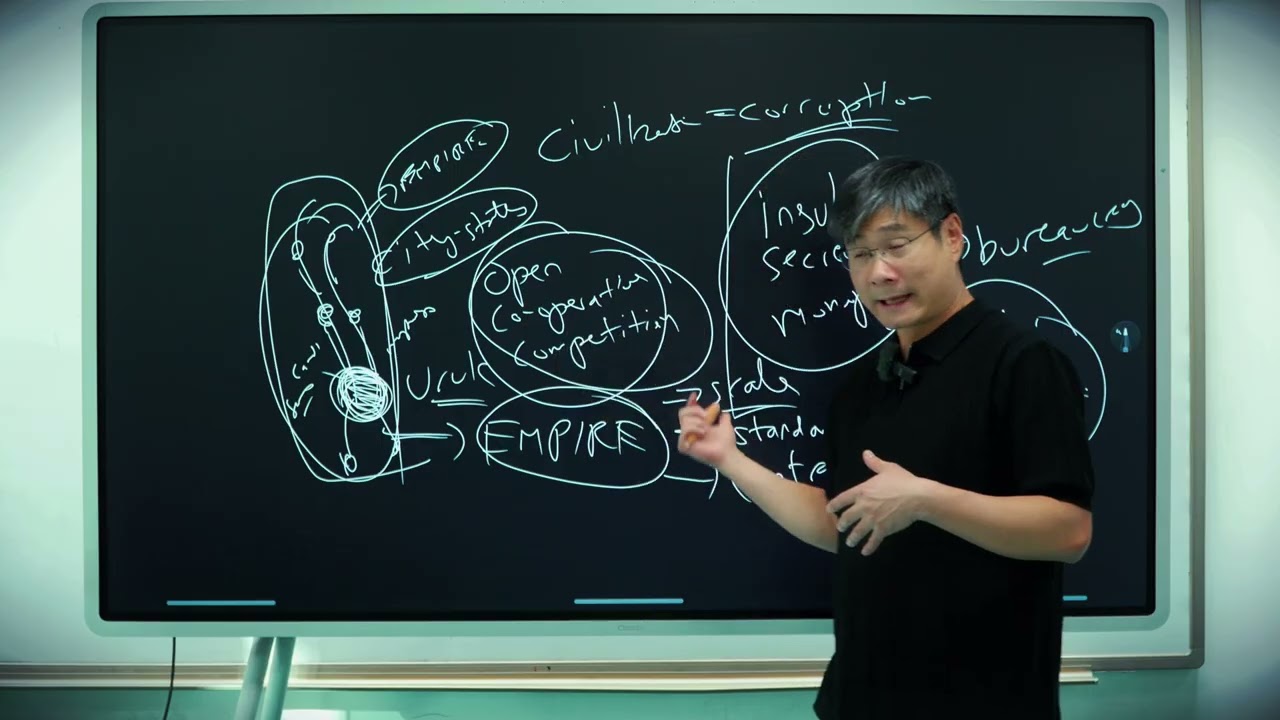
In the fourteenth lecture of his "Secret History" series, Professor Jiang Xueqin shatters the grand illusion of "civilization." By contrasting the stagnant, bureaucratic empires of antiquity with the mobile, fierce pastoralists of the Eurasian Steppes, Jiang reveals that the true innovators of history were the so-called "barbarians." From the domestication of the horse to the genetic conquests of the Yamnaya and the Mongols, this lecture explains how civilization acts as an engine of enslavement, while the Steppes served as a brutal but free training ground for the greatest conquerors the world has ever known.
WHY IT MATTERS:
The architects of The Wall desperately need you to believe that "civilization" is the ultimate sanctuary of safety and progress, while the outside world is filled with chaotic danger. But as Jiang exposes, civilization is the original Demiurgic machine—a trap of debt, immobility, and suffocating bureaucracy designed to bake vibrant human beings into docile bricks. The nomadic people of the Steppes represent the defiant spirit of "You Will Go Free." They thrived in a fluid, anti-bureaucratic system built on organic loyalty, fierce independence, and radical innovation. By understanding how empires inevitably rot from the top down, the sovereign seeker can detach from the dying Matrix and embrace the unbridled agency required to survive outside The Prison.
VIDEO SYNOPSIS:
Professor Jiang systematically deconstructs the myth of civilized progress and explores the dominant legacy of the pastoral nomads:
- The Myth of Civilization: Modern history claims that civilization breeds intellectual freedom and innovation, while nomads are static and violent [00:00:23]. Jiang argues the exact opposite: while early city-states were innovative, they inevitably consolidate into sprawling empires. These empires become monopolies of power that crush creativity, turning their citizens into trapped debt-slaves [00:09:09].
- The Birth of the Patriarchy: While early agricultural societies were largely peaceful and matriarchal, the harsh environment of the Steppes forced a different evolution. The reliance on livestock introduced the concept of highly valuable private property. This volatile economy inevitably led to theft, constant warfare, and the rise of a male-dominated hierarchy [00:19:17].
- Innovations of the Steppes: The brutal conditions of the grasslands forced three massive evolutionary leaps: lactose tolerance (which made the nomads physically larger and stronger than farmers), the domestication of the horse, and the invention of the wheel and wagon. This birthed a highly mobile, fiercely independent warrior culture [00:19:51].
- The Yamnaya Expansion: Around 2500 BCE, the Proto-Indo-European Yamnaya expanded into Europe, India, and Iran. Unlike farming communities that migrated as families, they migrated as bands of aggressive young men. They violently overtook the decaying agricultural societies, executing a genetic replacement of the native male populations and fundamentally rewriting global language and mythology [00:31:20].
- Warrior Brotherhoods & Secret Societies: Because of primogeniture (the eldest son inheriting the wealth), younger sons were forced to form fierce warrior brotherhoods and early secret societies to acquire cattle and wives [00:24:04]. Bound by oath and patron-client loyalty rather than bureaucratic slavery, these highly motivated brotherhoods (from the Yamnaya to the Mongols) repeatedly shattered the walls of decaying empires [00:53:02].
LINKS:
- Learn More on Prof. Jiang's Substack: https://predictivehistory.substack.com
- Support Professor Jiang's work: https://buymeacoffee.com/predictivehistory

