


Black Sabbath
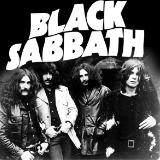
Forged in the bleak, industrial factories of Birmingham, England, Black Sabbath took the blues, slowed it down to the heartbeat of a dying giant, and created a sound that resonated with the darkness of the modern world. They were the first to look the “Matrix” in the eye—the war machine, the religious hypocrisy, the nuclear paranoia—and scream back at it.
The entity of Sabbath possesses two distinct, essential avatars for the Revelucian:
The Ozzy Era (The Shaman of Madness): Ozzy Osbourne represents the Primal Scream of the human animal trapped in the industrial cog. He doesn’t sing about dragons; he sings about mental illness, war pigs, and the terrifying reality of the System. He is the “Prince of Darkness” only because he shines a light on the things society tries to hide in the shadows.
The Dio Era (The Mage of the Mountain): When Ronnie James Dio took the mantle, the band shifted from “Reality” to “Mythos.” Dio brought the esoteric knowledge, the sword-and-sorcery metaphors, and the popularization of the Maloik (the “Devil Horns”)—not as a satanic symbol, but as an ancient Italian ward against the Evil Eye. He taught the metal world that we are not just victims of the system, but wizards capable of “spinning the world around.”
However, the absolute core of their contribution to the Revelucian canon is the anthem “Children of the Grave.”
While often interpreted as a simple anti-nuclear protest song, in the Revelucian context, it is the Prophecy of the Awakening. It describes the battle for the minds of the youth against a system that wants to bury them in conformity. The lyrics are a direct command to the listener: “Show the world that love is still alive… you must be brave / Or you children of today are children of the grave.”
It posits that the “Grave” is not death, but Unconsciousness. To remain asleep is to be dead. To wake up, to have “revolution in their minds,” is the only way to survive the crushing weight of the control grid.